What to check before booking a dune buggy in Dubai
Booking a buggy rental dubai trip sounds simple until the small details start to matter. A desert outing depends on more than picking a vehicle and choosing a time. The terrain, the rules, the paperwork, and the condition of the buggy all shape the day. A little care before payment helps avoid surprises at the pickup point and keeps attention on the drive itself.
The word buggy often covers several types of off road vehicles. Some are built for two people, some for four, and some are closer to a small utility vehicle than a sports style dune buggy. Before comparing options, decide who is driving, who is riding, and how much comfort matters. A compact buggy may feel lively and easy to handle, while a larger model can suit families or riders who want more room. The right choice depends on the group, not just the look of the vehicle.
One useful early stop is the AL Jazeera Tours official site, where the name can be kept in view while the practical details are compared elsewhere. A booking decision should rest on clear terms, not on a photo alone. Read the listing carefully and note what is included, what is optional, and what may be added on the day. If a point is vague, ask before confirming rather than assuming.
Vehicle type and route fit
Start with the route and match the buggy to it. A desert trail can include firm sand, soft dunes, rocky patches, and narrow turns. Vehicles differ in power, suspension, tyres, braking, and ground clearance. A buggy that performs well on a flat track may feel less capable on steep dunes. If the route is described as gentle, that may suit newer drivers. If it includes deep sand or technical sections, experience matters more.
Check whether the rental is for a guided route, an open area, or a set route with set times. These formats feel very different. A guided outing gives structure and reduces the chance of getting lost. A self drive format asks for more awareness, navigation, and restraint. For a first desert drive, a guided option is usually easier to judge. For experienced off road drivers, a more open format may feel less restrictive, though it still needs clear boundaries.
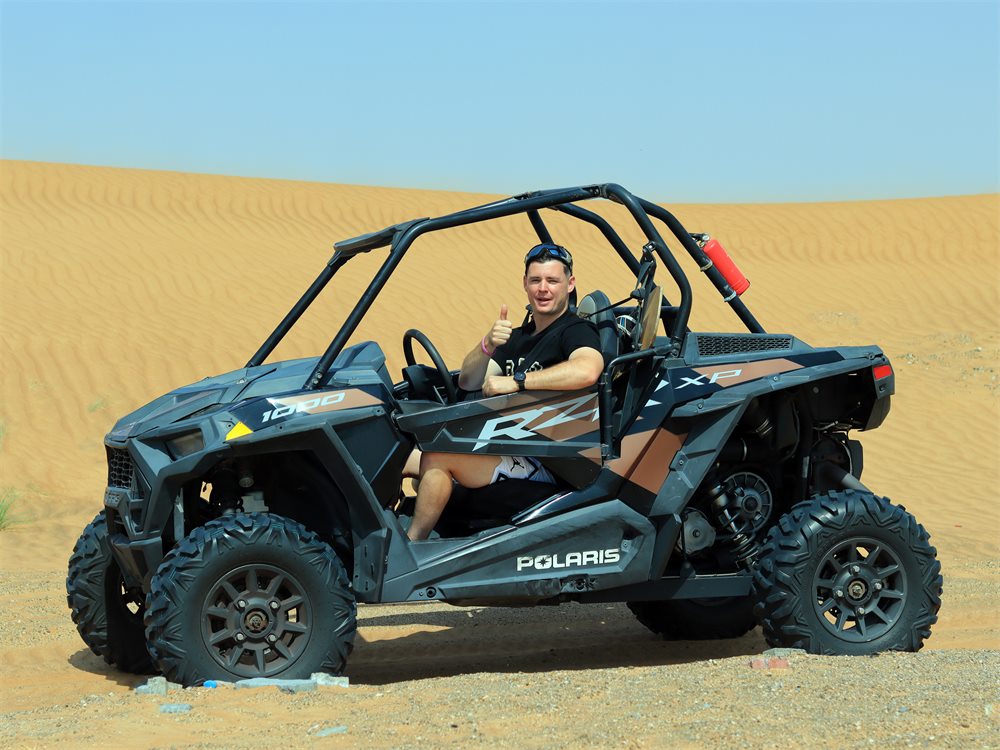
Seating is another practical point. Confirm the number of seats, seat belts, and whether children are allowed on that specific vehicle. Do not treat seating capacity as a loose suggestion. Extra riders change weight, balance, and stopping distance. If the group includes children or older riders, comfort and access matter as much as power. Ask whether the buggy has doors, side protection, roll protection, and a secure place for small items.
Driver rules and paperwork
Driver requirements can catch people out. Check the minimum age for driving, the minimum age for a passenger, and whether more than one driver is permitted. A dune buggy is not the same as a city car, and rental rules may be stricter than expected. If two people plan to take turns, make sure both are listed correctly before the booking is confirmed.
A drivers license is central to most rentals. Check which licence types are accepted and whether an international permit is required alongside the original document. Rules can depend on nationality, residency, and the type of vehicle. The safer approach is to confirm the document requirement before travel day. A missed detail here can stop the whole booking at the counter.
Also look at the deposit terms. A deposit is normal in vehicle rental, but the amount, hold period, and release process should be clear. Ask what can affect the deposit, such as damage, late return, cleaning, or missing equipment. Keep written confirmation of the agreed condition at pickup and return. Photographs can help if a dispute arises later, especially for body panels, tyres, and interior items.
Insurance deserves the same attention. Read what rental insurance covers and what it leaves out. Some policies include a deductible, while some exclusions apply to off road use, tyres, rollover damage, or driver error. The details vary, so avoid relying on a general assumption. If the wording is unclear, ask for a plain explanation of what the driver pays after an incident and what the rental provider covers.
Price details that are easy to miss
An hourly rate can look attractive, but check what the time period actually includes. Does the clock start at pickup, at departure from a base, or after a briefing? Is there a fixed window, and what happens if the group returns late? A clear time structure helps compare two offers fairly. A lower hourly rate may not be better if extras are added later.
Fuel is another point to settle early. Some rentals include fuel, some require a full tank at return, and others apply a fuel charge. Ask how the buggy is supplied and what is expected at the end. It is also worth checking whether the quoted price includes safety gear, guide service, entry permissions, refreshments, transport to the start point, or any mandatory fee. Items that seem minor can change the total.
Payment terms should be straightforward. Check the cancellation window, amendment rules, and what happens if weather affects the outing. Desert conditions can change, and a responsible booking plan accounts for that. A clear policy is better than a vague promise. Keep the confirmation message and read it against the terms shown at the time of booking.
For a broader comparison, the AL Jazeera Tours official site can be one reference point among others, but the final choice should come from matching the terms to the group, the route, and the driver's experience. That is more useful than choosing by headline price alone.
Safety, condition, and practical comfort
Before accepting a buggy, check its visible condition. Look at tyres for cuts, bulges, or uneven wear. Check that seats feel secure, belts latch properly, and the steering wheel is not loose in a worrying way. Look for fluid stains under the vehicle and damage to panels or bumpers. These observations do not replace a mechanical inspection, but they can reveal signs that a vehicle has had a hard life.
Safety equipment matters on a desert trail. Ask about helmets, gloves, goggles, and whether they are included or available to hire. Dust can be tiring, and loose clothing or poor eye protection can spoil the drive. Closed shoes are more sensible than sandals. Sunglasses, sun protection, and water are useful in warm conditions, even on a short outing.
Communication is easy to overlook. Confirm how the group will be briefed, how the route will be explained, and what happens if a buggy stops or a rider needs help. A clear plan for delays and emergencies is part of a well run experience. Ask whether mobile signal is reliable along the route and whether the driver carries a way to call for assistance. Avoid any situation where the group is simply pointed toward the dunes with no clear contact point.
Driving behaviour also belongs in the planning stage. Off road driving asks for smooth inputs, steady speed, and respect for dunes and other vehicles. Hard turns, sudden braking, and chasing steep slopes increase risk. A good outing leaves room for caution. If the briefing encourages reckless driving, treat that as a warning sign rather than part of the fun.
Final checks before confirming
A short set of questions can make the decision clearer:
- Is the buggy suited to the route, group size, and driver experience?
- Are the drivers licence, minimum age, and insurance terms fully confirmed?
- What do the hourly rate, deposit, fuel charge, and cancellation rules include?
- What safety gear is provided, and what should riders bring?
- How are route guidance, communication, and delays handled?
Once those answers are clear, compare the options side by side. The best choice is usually the one with plain terms, a suitable vehicle, and a route that matches the group's ability. A buggy trip in Dubai can be a strong experience when the basics are settled early. Careful checking does not remove every uncertainty, but it turns vague expectations into known conditions, which makes the day far easier to enjoy.